
London is a very popular student city! 93.9% of the reviewers in a study we shared said they would recommend living here.
But London student life is busy: lectures, shifts, nights out, flatmates coming and going. The one thing nobody schedules? The rubbish.
Yet waste can pile up fast in student accommodation, especially after a party, a big online shopping week, or a move.
In this guide we break down how to manage waste in London as a student (including international students new to UK recycling), what to do after parties, and how to handle bulky items and move-out clearances. We have consulted trusted London rubbish removal experts to ensure the advice is backed by established sources.
1. Know what “normal” waste looks like in London student housing
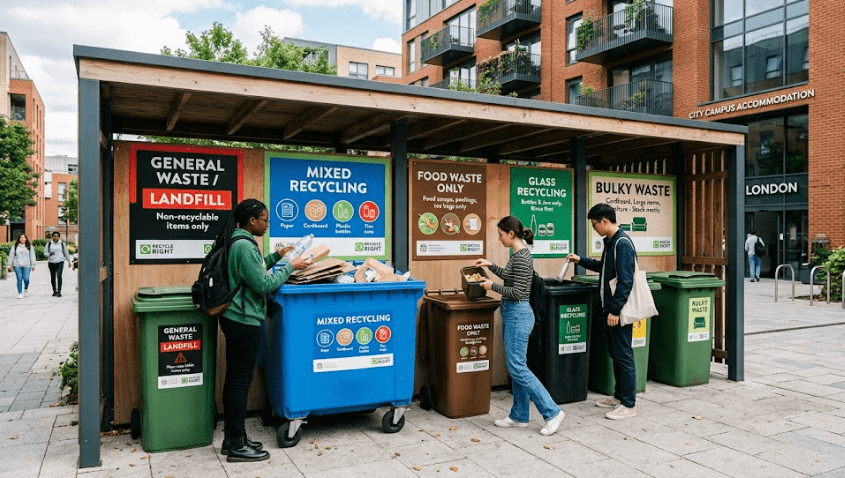
Most London homes and student blocks have a mix of:
- General waste (landfill/energy-from-waste)
- Mixed recycling (dry recycling)
- Food waste (not available everywhere)
- Glass recycling (sometimes separate)
- Bulky waste (furniture, mattresses, large appliances)
The exact rules vary by borough and by building management. If you’re in halls or a managed block, your bin store signage is usually the “source of truth” for what goes where. For international students in particular, it can be confusing so consulting waste removal experts like Man and Van Rubbish Removal for bigger waste collections would ensure that you avoid penalties for fly tipping.
A spokesperson for Man and Van Rubbish Removal highlights the challenges students face in London:
Every London borough has different recycling rules and processes, which might confuse students new to London. We pride ourselves with high recycling rates ensuring the majority of waste we collect is recycled to minimise what goes to landfill. So, leaving bigger waste clearance jobs to experts is the safest bet to avoid fines and support environmental efforts.
2. UK recycling basics (especially helpful for international students)
Recycling in the UK can feel inconsistent because councils collect different materials. But these tips will keep university freshers safe in most London boroughs:
- Empty and rinse: food residue can contaminate recycling.
- Keep it dry: wet paper/cardboard is often rejected.
- Don’t “wish-cycle”: if you’re unsure, don’t guess—check the bin label.
- Flatten cardboard: saves space in communal bins.
- Remove soft plastic film (unless your building explicitly accepts it): things like crisp packets and plastic wrap are often not accepted in standard mixed recycling.
Why it matters: contamination is a real issue. WRAP (a UK waste charity) reports that 84% of UK households unintentionally contaminate their recycling bins—often by putting the wrong item in.
3. The student flat checklist: keep bins under control week-to-week

A little routine prevents the classic “bin mountain” in the kitchen.
- Set a 2-minute daily reset: tie up one bag, take out bottles, flatten boxes.
- Create a mini sorting station: even two bags (general + recycling) helps.
- Label your bins (especially in shared houses): one sticky note can stop arguments.
- Keep a “bulky corner”: a small area for broken items, old pans, small appliances—so they don’t get dumped by the bins.
If you’re in a shared house, agree one rule: whoever fills it, empties it.
4. After a party: quick clean-up plan (without upsetting neighbours)
Parties create the same waste patterns every time: bottles, cans, pizza boxes, and “mystery bags.” Here’s the fastest way to recover:
- Bag general waste first (food, napkins, mixed leftovers).
- Separate bottles/cans into recycling.
- Deal with cardboard: if pizza boxes are greasy, they usually belong in general waste.
- Don’t overload communal bins: if your building has limited capacity, spread disposal across a day or two.
If you’ve got a lot of bags (or you’re worried about leaving rubbish outside), a same-day rubbish removal service can be the cleanest and most effortless option.
5. Move-out waste: how to avoid deposit drama

Move-out is when students accidentally create the biggest waste problem—because everything happens at once.
Common move-out items that need special handling
- Mattresses and bed frames
- Broken chairs, desks, wardrobes
- Old small appliances (kettles, microwaves)
- Bags of mixed clutter
Tips to reduce cost and hassle
- Start 10–14 days early: one bag a day beats a last-minute pile.
- Donate or rehome first: charities, student groups, building WhatsApp chats.
- Keep receipts/photos if you pay for a clearance—useful if there’s any dispute.
- Don’t dump items by the bins: many boroughs treat this as fly-tipping which is fined.
If you’re clearing a whole room or shared flat, booking a professional waste collection can save time and protect your deposit.
6. When to use a rubbish removal service (and what to ask)
A reputable rubbish removal company is useful when:
- You have bulky items that won’t fit in communal bins.
- You’re moving out and need a fast clearance.
- You’ve had a party and have multiple bags to remove.
- Your building has strict rules about leaving waste in corridors/bin stores.
Questions to ask before booking
- Do you provide a waste transfer note?
- Are you a licensed waste carrier?
- Can you give an all-in price (labour + disposal)?
- Do you recycle as much as possible?
Always confirm coverage for your postcode, what items they can take, and whether they can handle stairs/large loads.
7. A simple “bin guide” you can share with flatmates
Below the waste removals experts at Express Waste Removals break down what every London student must know when managing their rubbish.
- General waste: food waste (if no food bin), nappies, greasy pizza boxes, mixed dirty items.
- Recycling: clean plastic bottles, cans, paper, cardboard (flattened), clean trays (if accepted in your building).
- Glass: only if your building has a separate glass bin.
- Bulky waste: furniture, mattresses, large appliances—book a collection.
You will play a part in keeping London clean and healthy, because it’s not always been this way! You can learn about London’s dirty history in our partner magazine’s feature at London Business News in collaboration with the waste management pros at Snappy Rubbish Removals:
Being a student in London won’t be rubbish with the right support
If you’re studying in London, waste management is part of living independently—and it’s easier than it sounds once you’ve got a routine. Keep recycling clean and dry, don’t guess when you’re unsure, and plan ahead for parties and move-outs. When the volume is too much (or time is too tight), a licensed rubbish removal service in London can be the quickest way to stay tidy, avoid neighbour complaints, and protect your deposit.

Author Profile

- Online Media & PR Strategist
- Blogger and Educator by Passion | Contributor to many Business Blogs in the United Kingdom | Fascinated to Write Blogs in News & Education I have completed a journalism summer course at the London School of Journalism and manage various blogs.
Latest entries
 CultureSeptember 19, 202610 Best Beaches Near London to Visit in Any Weather!
 LifestyleJune 17, 2026Student Rubbish Removal in London: A Practical Guide for Parties, Move-Outs & Recycling Right
 BusinessFebruary 27, 2025Everything You Need To Know About The Recent UK Recession
 CultureJune 5, 20246 Best London Comedy Clubs for Good Laughs